Middle school can be a chaotic time—mini-teenagers with boundless energy can be hard to manage, especially in classrooms lacking clear routines and procedures.
As a special education teacher early in my career, I had the opportunity to co-teach in various classrooms and learn valuable lessons from veteran educators. One crucial takeaway was: structure creates freedom. Without structure, classrooms can spiral into disarray, which not only wastes time but also limits a teacher’s ability to teach effectively.
Through the years, I’ve found that establishing and maintaining routines reduces teacher burnout and provides the structure needed for creativity and impactful teaching. Here are five essential routines I’ve developed to set the tone for a successful school year with middle school students.
1. Entering the Classroom
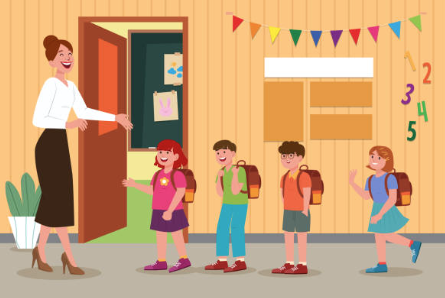
Middle schoolers naturally want to run around, touch things, and socialize as they enter a room. To set the right tone, I teach them a simple routine for entering:
Students come in, go straight to their seat, and check the “Getting Organized” screen.
This routine is explicitly explained, modeled, and practiced.
Practice makes perfect: Have students rehearse coming into the classroom correctly until it becomes a habit.
Use positive reinforcement: Celebrate and reward students who follow the routine with praise or small incentives like candy.
It takes time—sometimes a whole class period during the first week—but it’s worth it. After consistent practice, students adopt this habit naturally.
2. Getting Organized
To minimize wasted time during transitions, I created a “Getting Organized” slide listing all materials students need for class (e.g., books, notebooks, homework).
Students are expected to get all items ready within the first three minutes of class.
Like the first routine, this one requires explanation, modeling, and repeated practice.
Praise and incentives motivate students to follow the procedure consistently.
This simple routine saves precious minutes during lessons and helps class flow smoothly.
3. Seating Chart
A well-thought-out seating chart is vital for classroom management. Research has shown that carefully designed seating arrangements improve student engagement and performance, especially for struggling learners.
Group students into small clusters of 3-4 to foster collaboration.
To minimize disruptions, space talkative friends apart using a “compass” method (placing them at north, south, east, and west of the room).
With routines in place, even students in close proximity can stay on task.
4. Getting Students’ Attention
Yelling over students or waiting for them to quiet down is inefficient and exhausting. Instead, establish a consistent signal to regain their focus.
Use a sound-making device, such as a wireless doorbell, tambourine, or desk bell.
Combine it with a verbal countdown, such as, “Focus up here in 5… 4… 3…” to give students time to settle down.
This strategy is simple, effective, and saves valuable instructional time.
5. Pencil Management
Pencils can be a surprising source of disruption in middle school. Students often use sharpening pencils as an excuse to distract others.
One solution is banning wooden pencils entirely, instead encouraging students to use pens or mechanical pencils.
Alternatively, provide pre-sharpened pencils at each table or supply handheld sharpeners.
Assign a student helper to manage sharpening and restocking pencils at the end of the day.
Having a pencil management system eliminates unnecessary interruptions and keeps the class focused.
Bonus: Trash Management
Trash disposal can also become a disruption if not managed properly.
Place small trash cans at each table to minimize trips to the main trash can.
Model how students should dispose of items properly (e.g., wrapping gum in paper, not using the bins as hats).
Assign a student or table leader to empty the bins at the end of class.
Using trash cans as table markers adds an extra layer of organization.
Conclusion These five routines—along with clear expectations and consistent reinforcement—can transform your classroom. Implementing them takes time and practice, but the payoff is a more focused, engaged, and productive learning environment.